
The idea
Your left hand is the problem you named in the first lesson, and rhythm is where that problem lives. Syncing the hands is a clock issue rather than a dexterity issue. When two hands drift apart it is because one clock is running and both hands are taking turns holding it.
So we build the clock first, separately from the notes. Greg's model is the Time Stack, four layers in order: consistency, precision, flexibility, subtlety. Consistency is holding a tempo. Precision is putting a note exactly where you decided. Flexibility is putting it deliberately late by the same amount every time. Subtlety is the feel you absorb from records. You do not skip a layer, and a player with chops and no consistency cannot play with anybody.
Then polyrhythm, which sounds harder than it is. Three against four is one note value regrouped. The note stays the same length; you count it in threes for a while, then in fours. Greg calls it a phrasing difference, and once you hear it that way your hands stop fighting.
Watch
The polyrhythm videos are one series, and the titles do not match the order Greg made them in. Watch them in this order. Playing Jazz With Good Time and Feel: The Time Stack (start here)
- [02:00] Layer one, consistency: Pro Metronome with beats progressively muted, eyes closed, 80 to 90 bpm, then the same passage at 40.
- [05:05] Layer two, precision: a scale with every note on the sixteenth immediately after the beat, then a second pass immediately before.
- [06:18] Layer three, flexibility, on a DAW grid: quarter notes deliberately late, the distance from the grid identical every time.
- [07:36] Layer four, subtlety. His Jimmy Smith immersion story at [08:22] is the method, not an anecdote. For Musicians - Improve Your Time
- Sit upright, eyes closed, metronome at 104 with only the accented downbeat sounding. Clasp your fingers on beat one while feeling the three quarters internally. Alignment is the test.
- Why 104 and not 100: "I try to make it random every time so that I don't get calibrated to only feel a certain tempo." Then 73, which is much harder. USE A METRONOME! Thirty seconds, and it is the standing rule for every exercise below. Feel the time along with the click rather than relying on the click, so the inner pulse is what is actually developing. Polyrhythmic Exercise (the origin of the series)
- [00:29] Chick Corea bassline in the left hand, 90 bpm, click on every beat. [01:52] Convert the three count into a four count over the same left hand. [02:35] "The right hand is taking those triplets and moving it so the triplets are actually sixteenth notes in a slightly longer bar."
- [03:58] If you are not on the click, stop and regroup. [04:57] Five minutes a day for a week. Play Polyrhythms on Piano, then How to Practice Polyrhythms - 2nd lesson, then Learn to play polyrhythms - 3rd lesson. The click is removed in stages: every beat, then beat one deleted, then 110 bpm, then one click every four beats. [00:36] in the third lesson: do not look at the metronome. Greg names his own tendency to rush in all three and pulls it back on camera. Do the same rather than editing your practice in your head. Play Polyrhythms on Piano - First Lesson (last, despite the title). Polytonality over the polyrhythm: C Lydian ideas transplanted to an unrelated key on the same bassline, with question-and-answer phrasing [02:25]. At [05:14], "as long as you come back to your home base using consistent ideas, you can go way outside... and then come all the way back in." The four Afro Blue coaching sessions. These are the best rhythm teaching in the archive and they carry Exercises 5 and 6. Watch all four in order. Session one [01:03] The feel is diagnosed before anything else: the student's backing track plays a plain one-two-three and Greg says that beat is wrong for the tune. "The way that they're feeling it, it's not like one, two, three, one, two, three," and then at [01:59], "It's like that four, three." A four drives through the three, traced to the African rhythm behind the tune. [21:12] The tempo he sets for the first-layer solo is 168. [25:56] The practice prescription, in his words, is "give yourself limitations. Do the architecture." Session two, the layer stack, which is Exercise 5 below
- [06:01] On the ride, accent the 1 of the three and the "and" of the two, repeating. At [11:31] he names the goal: "keep the three as, as an essence but the four is really what's being executed throughout the kit." [08:14] Then he strips it to quarter notes while still thinking the three, and [09:54] rebuilds with ghost notes, warning against letting it collapse back onto a literal three.
- [08:14] Dynamics are the mechanism: "the more that you can differentiate the accent from the subtle tones, the more you'll be able to make this feel really come to life, and that can only be done by like really, really slow practice of dynamics."
- [25:02] The swung three: divide each of the three beats into a triplet and play only the last note of each triplet as the pickup. [33:23] "Never do a straight eighth note in the middle... because that'll mess up the feel."
- [30:28] Layer order: the swung three as the foundation, then set rhythms, then improvisation, with the four over the three already in hand from [06:01]. [53:19] "when you don't have an aspect of it, slow it, slow it down and then fill it in." Session three, the independence ladder, [06:57] through [17:28], each rung added only when the one below is solid: swung-three comping to a metronome; the same in the left hand alone at tempo; left hand plus one held right-hand note; that note moving in quarter notes; any swung eighth-note pattern; the range widened; then the octave exercise, C to C, over the same left hand. "Right now it's just about time and feel." Session four, notating the collisions, which is Exercise 6. The right-hand scalar pattern is set at [29:39], C, D♭, E♭, E. From [42:55] to [45:21] he runs it against a fixed left-hand rhythm, shows that the phrase works only because the left hand keeps landing on the same two notes, then moves the right hand up one scale step at a time until they stop lining up. At [45:21] into [48:06]: "Write down on a piece of staff paper, the left hand thing... exactly as it is. And then write down these different scalar patterns... above it and look at where it intersects." Also [04:43], the diagnosis that will apply to you: "the rhythm is great. It's the articulation." At [08:53] the fix turns out to be the pedal, "an imprecision in where the pedal was let up," rather than anything the fingers were doing. Polyrhythmic 17/16 groove and Blue in Green (in odd time) are performances with no talking. Use them as ear material. Tigran Hamasyan Transcription, first 20 minutes only. The left hand is an ostinato in 6/8 that is really 12/8; the right hand groups in fives across it. At [15:48] Greg counts the phrase lengths and finds 5, 5, 5, 6, 7, 6, 5. That growing and shrinking is the device to steal.

Playing Jazz With Good Time and Feel: The Time Stack
- the four-layer model this whole lesson is organized around

For Musicians - Improve Your Time
- the sitting, eyes-closed drill that builds the internal clock
USE A METRONOME!
- the standing rule attached to every exercise in this course
Polyrhythmic Exercise
- the origin of the polyrhythm series, at 90 bpm with a click on every beat
Play Polyrhythms on Piano
- the same exercise with beat one deleted from the click
How to Practice Polyrhythms - 2nd lesson
- 110 bpm on a second Chick Corea bassline, and alternating the groupings inside one solo
Learn to play polyrhythms - 3rd lesson
- one click every four beats, eyes off the metronome
Play Polyrhythms on Piano - First Lesson
- polytonality layered on top of the polyrhythm, once the polyrhythm is automatic

How to play Coltrane's Afro Blue on piano - session one
- the feel diagnosed first: a four driving through the three, and why the backing track was wrong
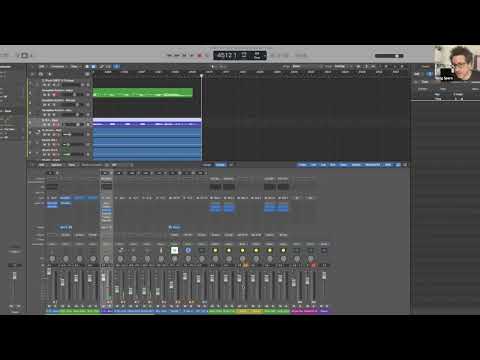
How to play Coltrane's Afro Blue - second coaching session Masterclass
- the layer stack for 3-against-2, built and stripped and rebuilt live with a trio

How to play Coltrane's Afro Blue on piano - third coaching session
- the seven-step independence ladder, from comping alone to an octave of right-hand motion

How to play Coltrane's Afro Blue on piano - fourth coaching session
- the write-it-down drill: notate where the hands intersect, then move the right hand until they stop
Polyrhythmic 17/16 groove
- an odd-meter groove to transcribe by ear; performance only, no spoken instruction
Blue in Green (in odd time)
- a tune you already know from A10 and A13, re-barred; performance only, no spoken instruction
Tigran Hamasyan Transcription
- watch only the first 20 minutes here, for how phrase lengths grow and shrink over a fixed ostinato
Listen
Five passes, the source course's protocol from Lesson 1, applied to rhythm.
Hamasyan, "Drip," 1:32-1:58. The melody stays in 4/4 while the accompaniment runs the same material at an 8:5 ratio, implying 5/4, with seven shared alignment points across the excerpt. By pass 5, listen for the moment the accompaniment breaks its own pattern so the four-bar hypermeasure can restart in phase. Schumann states that the transcriptions in his article are his own, so treat the ratio as a transcription-based claim.
Hamasyan, "Song for Melan and Rafik," from 3:44. Layer one is eight bars, seven of 5/8 plus one of 7/8, which is forty-two eighth notes. A 12/8 backbeat enters against it at 3:44. Twelve into forty-two does not divide, and the two layers meet again at eighty-four eighths, so layer two goes around seven times to layer one's two before they realign. Count the 12/8 layer only. Schumann made his own transcriptions, so this is a transcription-based reading.
Ligeti, "Désordre." Right hand on white notes, left on black. From bar 4 Ligeti deletes one eighth from the right hand every fourth bar, so the top line walks steadily ahead. Listen for drift that nobody is playing as drift.
Ligeti, "Automne à Varsovie." Sixteen fast pulses per bar; at one point the right hand accents every fifth and the left every third. Ligeti's gloss is that 5:3 is arithmetically trivial and perceptually complex, because you experience tempo levels rather than counted pulses.
Meshuggah, "Bleed" (obZen, 2008), at 1:25, 1:40 and 1:58. Greg named Meshuggah in the room on 9/6 as one of the two modern composers this whole curriculum is supposed to reference, so this is where they enter, and rhythm is the correct door. Lucas's reading of this passage, which is the one to listen for, is that the 4/4 layer never goes away, it only changes who is stating it. The cymbals state 4/4 clearly until about 1:25, then move to eighths with a popping kick. By about 1:40 the cymbals have joined the new pattern and the vocals alone carry the 4/4. From about 1:58 the lead guitar marks the downbeats. Pass 1, find the 4/4 and hold it. Pass 2, keep holding it and notice that the instrument you are holding it with keeps changing. Pass 5, count out loud through the whole excerpt without losing beat one.
Two more for the same device. "Rational Gaze" (Nothing, 2002), the main riff: Pieslak's analysis is that the riff's attack-point interval series does not divide the 4/4 bar evenly, so the pattern re-phases while the backbeat stays fixed. "Lethargica" (obZen, 2008), the riff entry: Lucas's rotated riff, whose internal durational pattern is arranged so the loop sounds as if it starts in the middle, which blurs where the segment begins. Tap 4/4 on your knee through both and do not let the riff take it from you.
Nancarrow, Studies 36 and 40. Study 36 is a four-voice canon at 17:18:19:20, close enough that it stays audible as a canon while it separates. Study 40 runs at the ratio e:π, so the voices can never realign. Listening only.
Sing nothing here. Tap the slower layer on your knee with the left hand and the faster layer with the right, and stop when they disagree.
At the piano
The left hand carries the fixed thing and the right hand carries the moving thing, always in that order.
Learn one left-hand ostinato cold before any of this. Use the Chick Corea bassline from the polyrhythm videos, or write your own four-bar figure in D minor with a note on every beat. It has to be automatic enough that you can talk while playing it. That is the entry requirement.
Set Pro Metronome at 90 and play the ostinato with the click on every beat until three minutes pass with no hitches. Then start deleting clicks: beat one silenced, two clicks per bar, one click per bar, one click every two bars. Eyes closed from the second stage on.
For the polyrhythm, count out loud. Say "one two three" with the left hand, then keep the exact same note speed in the right and say "one two three four." Use a single repeated note in the right hand first, so nothing but the grouping is in question. Musical material comes after the grouping is stable.
For odd meter, take a tune whose shape you already own. Play the Blue in Green head in 4/4, then re-bar it in 5, keeping the contour and letting the harmonic rhythm stretch. Count the 5 as 3+2 and then as 2+3 and hear that they are different tunes.
Metric superimposition, which is the Meshuggah device and the one you came in wanting. You told Greg the metal and punk work "eventually kind of turned into like oh some weird time signatures," so this is the technique behind most of what you liked. Pieslak's name for it is metric superimposition: the guitars, bass and kick play a riff whose cycle is an odd number of eighths or sixteenths, while the drummer's cymbal hand and snare hold an unbroken 4/4. The odd cycle rolls across the barline and re-phases until the two coincide again, which happens at the least common multiple of the two lengths and nowhere else. Pieslak's structural point is the one that makes it composable rather than chaotic: the odd riff is bounded by a symmetrical hypermeter, so the irregularity is always a foreground event over a regular background.
At the piano that is two hands and one rule. Left hand holds a plain 4/4, quarter notes on the beat, and never moves. Right hand plays a figure whose length is an odd number of eighths, seven to start. Count the left hand out loud. The right hand will land on a different beat every bar and return to beat one after seven bars, because seven eighths against eight eighths realigns at fifty-six eighths. That number is the composition. Choose the cycle length by choosing when you want the alignment, rather than choosing a riff and finding out afterward.
The caveat, because this comparison is usually made wrongly. Meshuggah is not Stravinsky. In Stravinsky the bar itself is the composed object and the meter is renotated bar by bar, 5/8 then 7/8 then 3/16, so the listener's pulse is genuinely displaced and there is nothing left to count against. In Meshuggah the bar is a fixed container and only its contents move. Lucas documents that the songs are built in segments of eight, sixteen or thirty-two bars of 4/4, and that the riffs "fall in and out of alignment with this background structure, but rarely overcome it." That is why a Meshuggah audience can contain people counting in the balcony and people moshing in the pit to the same music. The right classical comparison is Krebs's grouping dissonance, where a recurring group of x attacks runs against a metric layer of y and the interest is the phase relationship over time. Where even that breaks: Krebs's dissonances resolve, because the composer aligns the layers at a cadence and harmonic syntax carries the form, and Meshuggah has no harmonic syntax to resolve into, so the alignment point is arithmetic rather than cadential.
Hannan's argument is worth knowing for the reason rather than the mechanism. He distinguishes extreme metric malleability, which is Meshuggah, from non-metricism, which is The Dillinger Escape Plan, and argues that the rhythmic difficulty itself is what produces heaviness, through what he calls enactments of sonic metaphors for size, weight, density, power, transgression and seriousness. That is an answer to why a band would do this, as opposed to how.
Exercises
1. The internal clock, sitting
Do. Sit upright, eyes closed, hands on knees. Metronome at 104, accent on, quarter notes off, so only beat one sounds. Feel the three intervening quarters and clasp your fingers on each downbeat. Breathe deeply and out of phase. Five minutes, then repeat at 73. Use a different non-round tempo every session.
Done when: your clasp lands on the click for 20 consecutive bars at 73 bpm.
2. Consistency at the keyboard, click removed in stages
Do. Play your left-hand ostinato at 90 bpm through four stages: click on every beat, beat one silenced, one click per bar, one click every two bars. Eyes closed from stage two on. Then run the whole ladder again at 40 bpm.
Done when: you play 16 consecutive bars at one click every two bars, at 40 bpm, and the click lands where you expected it every time.
3. Precision, off the beat
Do. Play a two-octave scale, hands separately, with every note on the sixteenth immediately after the beat. Second pass, every note on the sixteenth immediately before. Third pass, alternating every two bars.
Done when: both versions are even, neither collapses back onto the beat, and you can name which one you are doing without checking.
4. Three against four, one hand each
Do. Left hand plays the ostinato in three at 90 bpm. Right hand plays a single repeated note, first grouped in three, then regrouped in four at the same note speed. Alternate every four bars. When that holds, replace the repeated note with question-and-answer phrases in D minor. Fall off the click and you stop and regroup rather than playing through.
Done when: you can switch three to four to three on command for two minutes with the ostinato never faltering, five minutes a day for a week.
5. The layer stack, 3-against-2. Do: Work the Afro Blue stack in Greg's order, adding a layer only when the one below it is solid.
- Layer 1, the swung three. Divide each of the three beats into a triplet and play only the last note of each triplet as a pickup into the next beat. Loop the "and" of beats 2 and 3 slowly on its own until it is automatic, then speed it up. No straight eighth in the middle, ever.
- Layer 2, the four over the three. Keep the three as an essence and execute the four. Accent the 1 of the three and the "and" of the two, repeating.
- Layer 3, strip it. Play only quarter notes while thinking the three. Then rebuild, adding the softer notes back in around the accents. Practice the dynamic range from very soft to very loud, slowly. This part takes hours and it is where the feel actually lives.
- Layer 4, set rhythms, then improvisation. Fix a comping figure, hold it, and only then improvise around it. Any layer that will not sit, slow it down and fill it in before moving on. Done when: you can play the four over the three for two minutes without it collapsing back onto a literal three, with the accents clearly louder than the surrounding notes.
6. Notate where the hands collide
Do. Write your left-hand comping rhythm on staff paper, exactly as you play it. Above it, write a four-note right-hand scalar pattern (C, D♭, E♭, E, then the same reversed) and mark every point where the two hands land together. Play it, and notice which coincidences are carrying you. Then move the right-hand pattern up one scale step at a time until the hands no longer line up, and play each version. Then change the hemiola, add a note to the pattern, add another, and re-mark the collisions each time.
Done when: you can play the left-hand rhythm unchanged under four right-hand patterns that share no landing points with it, and you can point on the page to where each version does and does not intersect.
7. Placement: precision and flexibility, measured
Do. Record quarter notes to a click in Logic at 100 bpm. One pass aiming exactly on the grid, a second pass deliberately behind by a fixed amount. Measure the displacement of every note on the MIDI grid. If the grid shows rushing you did not hear, strip back to plain quarter notes and rebuild, which is what Greg's student did between Afro Blue sessions three and four.
Done when: the grid shows the same displacement, within a narrow window, on every note of the laid-back pass.
8. Metric superimposition, seven against eight, both hands
Do. Left hand plays quarter notes on a single low note in 4/4 at 60 BPM, click on every beat, and does not change. Right hand plays a seven-eighth-note figure, repeating immediately with no gap, so it crosses the barline. Count the left hand out loud, "one two three four," through the whole thing. Run it until the right-hand figure has returned to beat one, which takes seven bars. Then write the figure out and mark, bar by bar, which beat it starts on. Then repeat with a five-eighth figure, and predict the realignment point before you play it.
Done when: you can play seven bars without losing the count out loud, you can state where a nine-eighth figure would realign against 4/4 before playing it, and you can say in one sentence why this is not what Stravinsky does.
9. Odd meter, counted and transcribed
Do. Transcribe the "Polyrhythmic 17/16 groove" ostinato by ear and write it out in 17/16 by hand. Clap the cycle against a click marking only the first sixteenth of each cycle. Separately, re-bar the Blue in Green head in 5 and play both versions back to back.
Done when: the 17/16 ostinato holds for eight cycles with the click landing correctly, and Blue in Green works in 4 and in 5 without the melody losing its shape.
Checkpoint
- 20 consecutive bars at 73 bpm in the sitting drill, clasp on the click.
- Left-hand ostinato held for 16 bars at 40 bpm with one click every two bars, eyes closed.
- Scale played on the sixteenth after the beat and on the sixteenth before, both even.
- Three against four alternating on command for two minutes, ostinato intact, and the four held over the three for two minutes without collapsing.
- A page of staff paper showing your left-hand rhythm under four right-hand patterns, collisions marked, all four playable.
- A hand-written 17/16 transcription of the groove played for eight cycles, and Blue in Green played in 4/4 and in 5 back to back.
Read
- Source course, Lesson 1, the four dimensions of listening. Distance is the one rhythm needs most: a cycle only exists if you remember where it started.
- Source course, Lesson 4, on hearing two independent streams. Same machinery you use to hold two rhythmic layers apart.
- Schumann, MTO 27/2 (2021), on Hamasyan: the definitions of complete and incomplete cycle, and the two analyses above.
- Steinitz, "The Dynamics of Disorder," Musical Times, May 1996, on "Désordre." The quaver-deletion mechanism is stated bar by bar, which is why the piece works as an exercise model.
- Taylor, MTO 3/3 (1997), for Ligeti's own account of combining the European hemiola with an additive pulse layer.
- The Afro Blue sessions themselves. There is no book for this part. Session two is the layer stack, session three is the independence ladder, session four is the notation drill. Take notes on all three.
- Gann, "Annotated List of Works", for the Nancarrow ratios. Use them exactly as Gann gives them (17:18:19:20 for Study 36, e:π for Study 40, 4/5/6 for Study 49). There is no 2:3:4 canon in Nancarrow's output.